
The Land Is a Memory.
Historika works to understand and protect what it holds.
Historika Foundations is an independent nonprofit organisation researching, mapping and documenting Bharat's civilisational landscapes, and developing the evidence needed for their conservation and restoration.
Its work brings together history, archaeology, sacred geography, satellite and geospatial technologies, field documentation, traditional knowledge and living community memory.
Independent Nonprofit | Cultural-Landscape Research | Digital Archaeology | Heritage Conservation
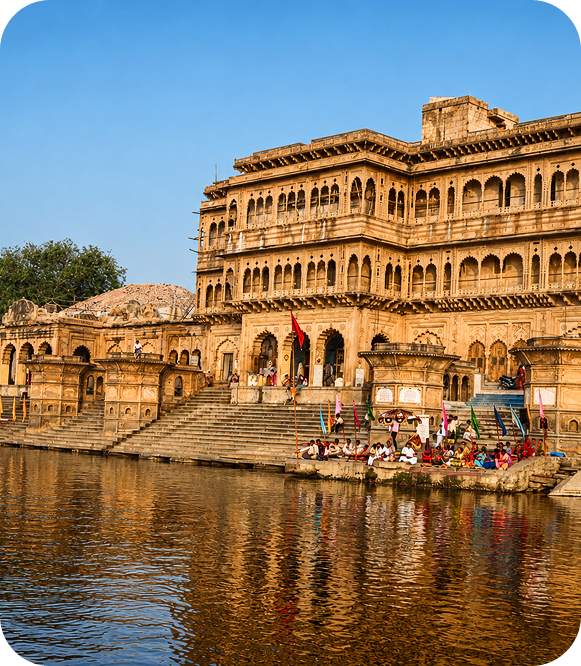
Heritage begins to disappear when its meaning is lost
A site is not lost only when it is demolished. It can also disappear when its history is forgotten, when its landscape is broken into unrelated fragments, when a sacred water body loses its ecological and cultural life, or when a living place is reduced to an isolated monument.
Bharat's civilisational memory survives across texts, archaeological remains, temples, kunds, rivers, settlements, inscriptions, traditional routes, oral traditions and community memory. No single source tells the whole story.
Historika exists to bring these fragments together - to research them carefully, document them before they are lost, and build the knowledge required for responsible conservation and restoration.
Research. Map. Document.
Conserve. Communicate.
Historika works across five connected areas. No single discipline is treated as sufficient on its own.
Historical and textual research
Studies texts, archives, inscriptions, maps and earlier scholarship to understand how places, routes, settlements and cultural traditions changed over time.
Digital archaeology and geospatial mapping
Uses GIS, satellite imagery, remote sensing and other non-invasive tools to examine large landscapes and identify patterns for closer study.
Field documentation and digital records
Geotags and documents temples, settlements, kunds, ruins, sacred routes and other cultural features through structured maps, photographs and field records.
Conservation and restoration planning
Builds the historical, architectural, ecological and technical evidence required before intervention, with the relevant authorities, specialists, permissions and custodians.
Public history and education
Carries serious research beyond specialist circles through books, films, lectures, podcasts, educational programmes and public conversations.
Ancient questions. Modern tools.
Evidence on the ground.
An ordinary visitor may see a temple, a kund and a nearby village. A researcher asks: Why was the temple built here? What older settlement existed around it? Which texts, records or inscriptions mention the place? How was the water system connected to the settlement? What routes joined it to neighbouring sites? What survives in local memory? What is threatened today?
Texts and archives
Geospatial analysis
Field documentation
Ground verification
Digital heritage record
Conservation planning
Evidence First. Conclusions
With Care.
Historika distinguishes established evidence from interpretation and living tradition. It states uncertainty, records sources and methods, prefers non-invasive investigation where appropriate, respects communities and custodians, and revises conclusions when stronger evidence emerges.
Heritage research requires many kinds of knowledge. Historika therefore works through project-specific engagements with historians, archaeologists, geospatial scientists, technologists, conservation professionals, public institutions and local knowledge holders.
The objective is not simply to create a list of locations. It is to understand a landscape as an interconnected historical, ecological and cultural system.

Mapping Bharat beyond its monuments
Historika's work treats temples, settlements, water systems, routes, terrain and living memory as parts of a connected cultural landscape.
Braj cultural-landscape mapping
Historika studies Braj as a living cultural landscape shaped by temples, kunds, groves, hills, settlements, traditional routes, oral traditions and centuries of memory. The long-term objective is a field-verified Braj Living Heritage Atlas.
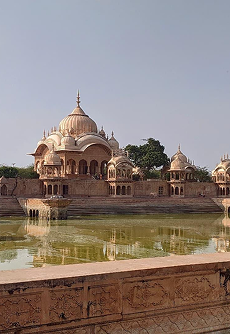
Mora-Tosh pilot
A proposed non-invasive documentation pilot combining GPS and GIS records, field and drone documentation where permitted, oral histories, cultural memory and site-condition recording. It is intended as a model for wider landscape documentation.
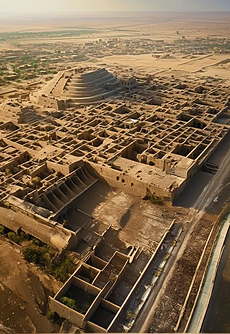
Braj kund documentation and restoration
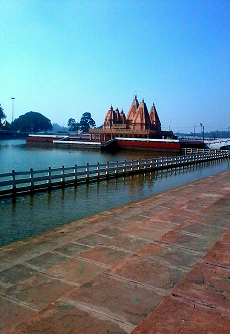
A developing framework that treats sacred water bodies as historical, ecological and community systems - not as beautification projects. The intended sequence is: Document. Assess. Restore. Maintain.
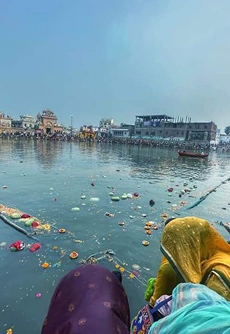
Kurukshetra cultural-landscape mapping
A developing programme bringing textual geography, archaeology, historical maps, remote sensing, GIS and field documentation together to study sites, settlements, water systems, routes and terrain as one connected landscape.
Research must reach people
Historika's purpose is not served if knowledge remains confined to specialist circles. Its research and public-history work reaches wider audiences through books, films, lectures, podcasts, educational programmes and public conversations.
Mahabharata: Myth or History? brings a historical and archaeological question to a wider reading public.
Science in Ancient India carries research and historical inquiry into documentary form.
Lectures, podcasts and long-form public conversations explore Bharat's history, archaeology and civilisational landscapes.
Make serious research accessible without making it superficial.
Separate organisations. A shared concern for heritage.
Historika Foundations is an independent nonprofit heritage organisation. Bhumivox Experiences Private Limited is a separate commercial travel and experiences company, responsible for the journeys it designs and operates, including bookings, payments, customer service, operations and traveller responsibility.
Bhumivox was conceived with a larger purpose: to build wider concern for Bharat's heritage and, through separately decided, documented and authorised initiatives, to support Historika's independent work in heritage mapping, conservation and restoration.
Research the past. Document what
survives. Protect what remains.
Explore Historika's current work, discuss an institutional or conservation collaboration, or support the organisation directly through its authorised channels.
Bhumivox journeys are commercial travel services. A booking is not a donation to Historika.
Disclaimer
This does not create an automatic transfer of money, research, data, intellectual property, authority or responsibility between the two organisations. Any support or collaboration must be separately agreed, documented and governed.
A Bhumivox booking is a commercial travel transaction, not a donation to Historika. No fixed amount or percentage should be assumed to reach Historika unless a specific arrangement is expressly disclosed.
Direct support for Historika is accepted only through Historika's official authorised channels. Historika does not operate Bhumivox bookings or assume responsibility for Bhumivox travellers.