Born and raised in Tamil Nadu in a Sindhi family with North Indian roots, Chandru grew up at the meeting point of different Indian cultural worlds. Temples, regional traditions, family histories and memories of the past made history feel less like a school subject and more like something carried by places and people.
He went on to complete a Bachelor of Engineering in Computer Science and Engineering and began his professional career in technology. Engineering trained him to think in systems: gather information, identify relationships, compare patterns, test assumptions and examine how apparently separate parts fit together.
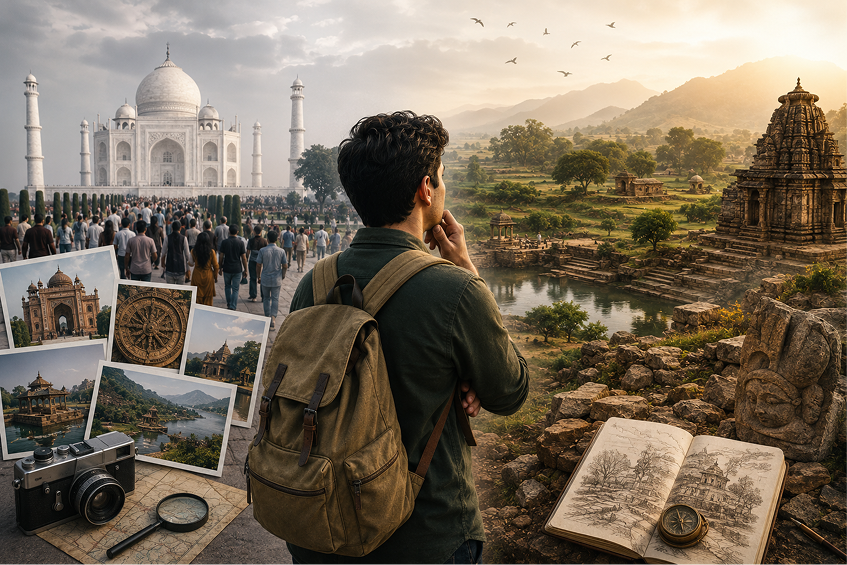
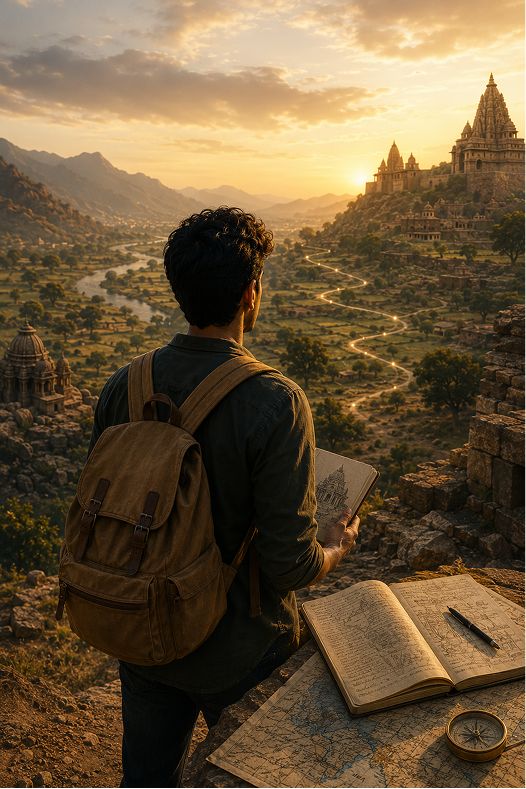
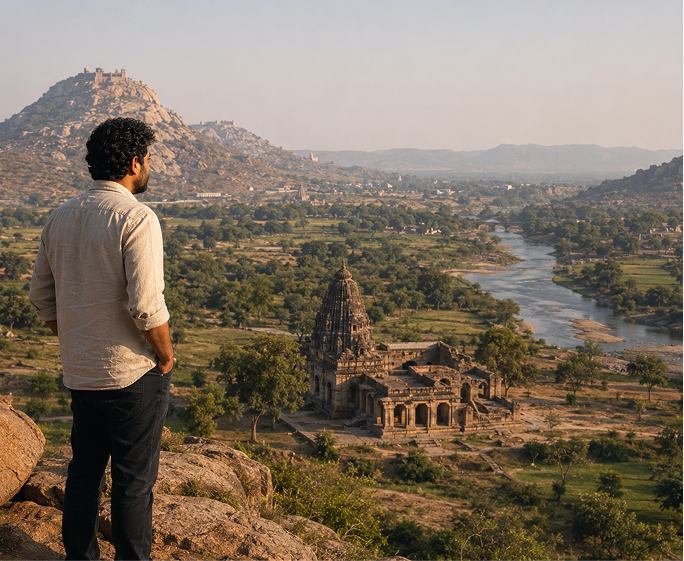
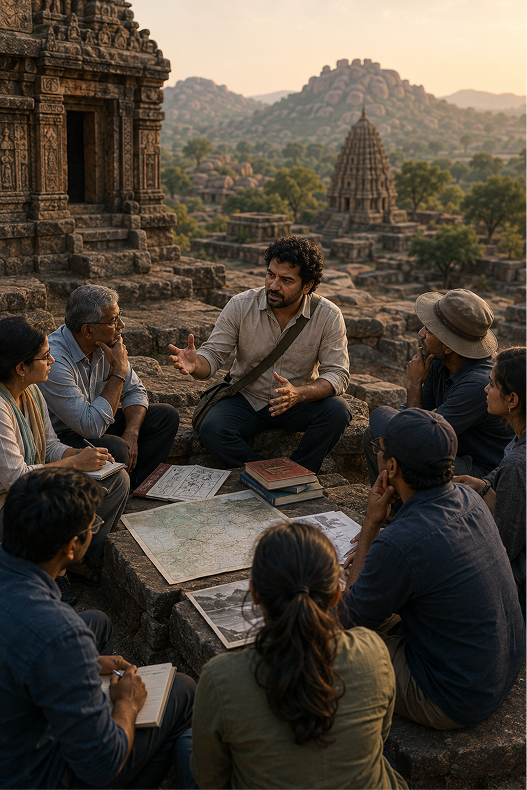
Alongside that career, his engagement with Indian history and ancient literature deepened. A decisive turning point came during an extended journey of nearly three months through North India. Moving through temples, archaeological sites, historic cities and living sacred landscapes - and meeting scholars, guides, practitioners and local custodians - he began to recognise a principle that would shape his later work: much of Bharat's history cannot be understood by studying monuments, texts or traditions in isolation.
The land itself had to be read.
A place mentioned in a text could acquire new meaning when seen against its rivers, routes and neighbouring settlements.
A ritual or oral memory could preserve the importance of a site even where little architecture survived. A famous monument could become more intelligible when understood as one element of a larger cultural landscape.
Among the questions that emerged from these journeys, the Mahabharata became the most sustained. By 2018, Chandru had begun a multidisciplinary investigation into its historical and geographical questions, bringing textual references into conversation with archaeology, material evidence, geography, scientific studies, cultural continuity and repeated field travel.
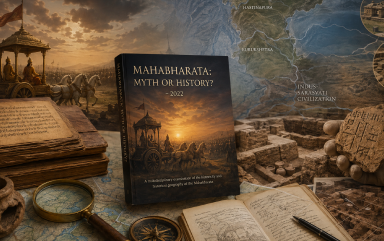
That work eventually became Mahabharata: Myth or History?, published in 2022. What began as a personal enquiry had become a larger mission: to research, document, map and communicate the civilisational landscapes of Bharat.